

 en
 zh
 it
 es
 ja
 sv
 no
 nl
 ko
 fi
 ru
 fr
 de
 Nov 02, 2026
Perovskite solar cells have attracted growing attention in the renewable energy industry because of their high light absorption capacity, lightweight structure, and potential for flexible applications. Compared with conventional silicon solar cells, perovskite technology offers more freedom in module design and can be adapted to surfaces where traditional rigid panels are difficult to install.
However, achieving high power conversion efficiency (PCE) is only one part of developing a commercially viable solar product. Actual performance depends on several interconnected factors, including material quality, charge transport, light conditions, temperature, environmental stability, and manufacturing consistency.
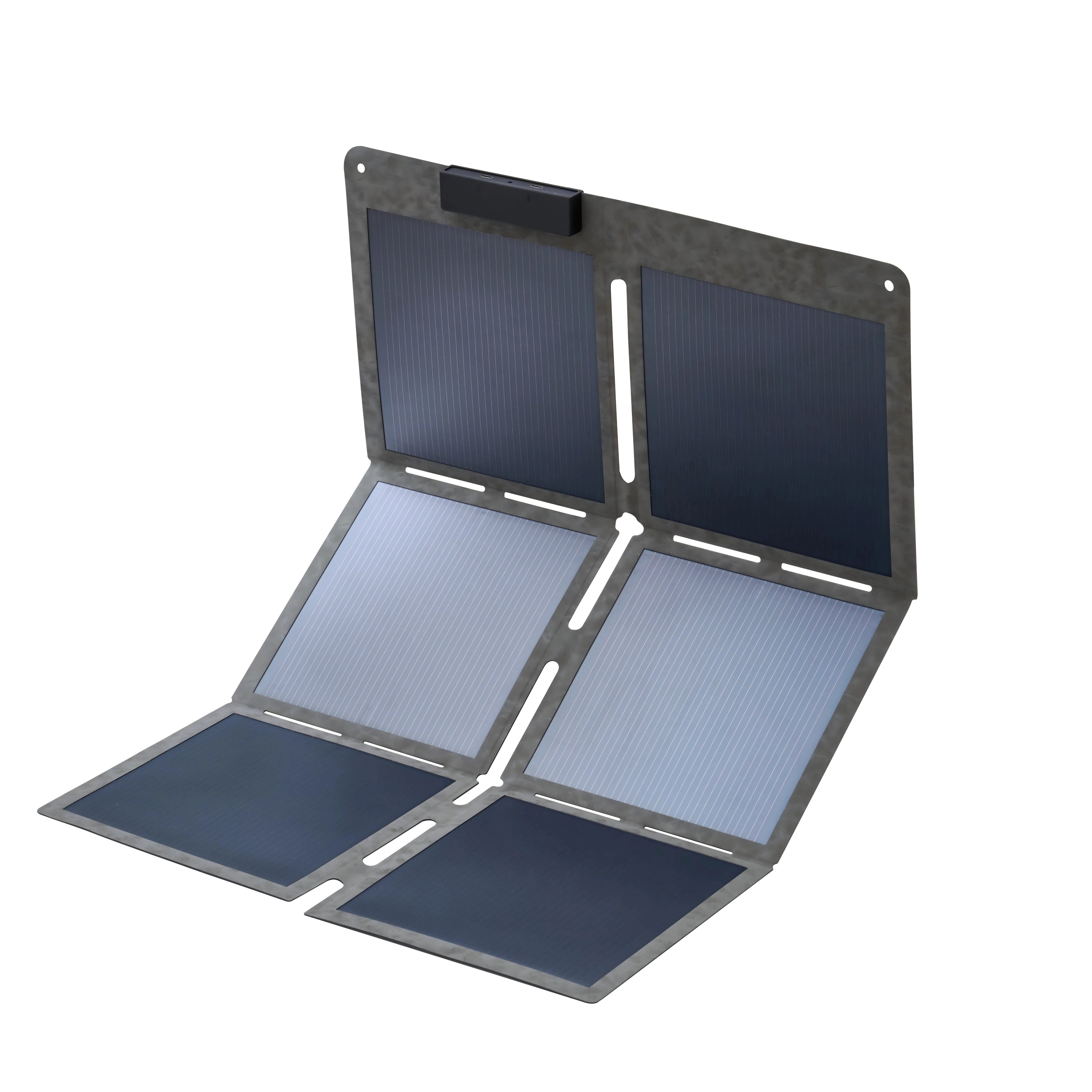
For manufacturers and product developers, understanding these factors is essential when selecting perovskite solar modules for outdoor equipment, portable electronics, building-integrated photovoltaics, and other applications.
This article examines the main factors affecting perovskite solar cell performance and explains why testing, manufacturing control, and module integration are equally important.
1. Perovskite Material Quality and Light Absorption
The quality of the perovskite absorber layer has a direct influence on solar cell efficiency. This material is responsible for absorbing incoming sunlight and generating electron-hole pairs that can eventually produce electrical current.
Several material properties determine how effectively this process takes place:
Crystal structure: A uniform crystal structure helps reduce defects that can interfere with charge movement.
Film thickness: The absorber layer must be thick enough to capture sufficient sunlight without creating unnecessary charge recombination.
Surface uniformity: Uneven films can cause inconsistent electrical performance across the cell.
Defect concentration: Excessive defects may trap charge carriers and reduce the amount of usable electrical energy.
In practical manufacturing, controlling the deposition process is therefore critical. Variations in coating thickness, crystallization conditions, and material composition can lead to differences in output between individual cells.
For flexible perovskite modules, these challenges become more important because the supporting substrates and manufacturing processes must also accommodate lightweight and bendable structures.
A reliable production process should focus not only on achieving high initial efficiency but also on maintaining consistent material quality across larger module areas.
2. Charge Transport and Recombination Losses
After sunlight is absorbed, the generated electrons and holes must move through different functional layers before reaching their respective electrodes. This process is known as charge transport.
The efficiency of charge collection depends on several factors:
Transport layer quality: Electron transport layers and hole transport layers must support efficient carrier movement while minimizing electrical resistance.
Interface compatibility: Poor contact between adjacent layers can create energy barriers that make charge extraction more difficult.
Charge recombination: When electrons and holes recombine before reaching the electrodes, some of the absorbed energy is lost instead of being converted into electricity.
These losses can reduce both short-circuit current and open-circuit voltage, ultimately lowering power conversion efficiency.
Manufacturers need to evaluate the complete device structure rather than focusing on the absorber layer alone. Electrode materials, interface treatments, layer thickness, and production conditions all contribute to overall electrical performance.
For commercial applications, a well-designed cell structure should also maintain stable electrical characteristics during repeated operation under different environmental conditions.
3. Light Intensity and Spectral Conditions
Light intensity is another major factor affecting perovskite solar cell output.
Under standard test conditions, solar cells are commonly evaluated using simulated sunlight at 1,000 W/m², an AM1.5G spectrum, and a cell temperature of 25°C. These conditions provide a consistent reference for comparing performance.
However, real-world lighting conditions are rarely constant.
Outdoor solar modules experience changes caused by:
Morning and afternoon sunlight variations.
Cloud cover and changing weather.
Seasonal differences in solar radiation.
Partial shading from buildings, trees, or surrounding equipment.
Different installation angles and orientations.
Indoor applications introduce another challenge because artificial light sources have different spectral distributions and intensities compared with natural sunlight.
This is particularly relevant for portable devices and low-power electronic products. A module that performs well under strong outdoor illumination may not deliver the same results under weak indoor lighting.
SunFlex has developed patented low-light and anti-shading power generation technologies to address these application requirements. These technologies are relevant to product developers who need flexible solar solutions for environments where illumination is not always uniform.
Nevertheless, the actual output should always be evaluated under the specific lighting conditions expected in the final application.
4. Temperature and Environmental Stability
Temperature has a significant impact on perovskite solar cell performance and long-term reliability.
When module temperature increases, several electrical parameters may change. In particular, open-circuit voltage generally decreases as temperature rises, although the exact behavior depends on cell composition and device structure.
High temperatures can also accelerate material degradation and affect interfaces between functional layers.
For outdoor applications, solar modules may experience prolonged exposure to direct sunlight, high ambient temperatures, and repeated temperature fluctuations. These conditions make thermal stability an important consideration during product development.
Humidity is another major concern. Moisture can penetrate poorly protected module structures and cause chemical or physical degradation of sensitive perovskite materials.
To evaluate these risks, manufacturers need to conduct controlled environmental testing rather than relying only on initial electrical measurements.
Suzhou SunFlex New Energy Co., Ltd. places considerable emphasis on product stability and environmental validation. Its flexible perovskite modules have undergone the following T80-related validation programs:
Test category | Validation duration |
|---|---|
Simulated sunlight aging | More than 1,500 hours |
Damp heat aging | More than 2,000 hours |
UV aging | More than 500 hours |
These test results provide useful evidence for evaluating material and module durability. Actual service life, however, still depends on module encapsulation, installation conditions, operating temperature, and exposure environment.
5. Module Encapsulation and Protection
Even if a perovskite cell has excellent initial efficiency, poor packaging can quickly affect its performance in practical applications.
Encapsulation protects the active materials and electrical connections from external environmental conditions. For flexible solar modules, this process requires additional attention because the protective structure must provide sufficient barrier performance without making the module too rigid or heavy.
Important considerations include:
Moisture resistance: Protective layers should reduce water vapor penetration.
Oxygen resistance: Limiting oxygen exposure helps reduce environmental degradation.
UV protection: Suitable protective materials can reduce damage caused by prolonged ultraviolet exposure.
Edge sealing: Module edges are potential entry points for moisture and other contaminants.
Mechanical compatibility: Protective layers should remain functional when the module is bent or installed on curved surfaces.
The challenge is to balance protection with flexibility. Excessively rigid packaging may limit installation options, while insufficient protection can shorten the module's useful operating life.
For this reason, encapsulation materials and sealing processes should be evaluated as part of the complete module design.
6. Mechanical Flexibility and Module Design
One of the main advantages of flexible perovskite solar technology is its ability to adapt to different product structures and installation environments.
Traditional rigid solar panels are not suitable for every application. Their weight, thickness, and fixed dimensions can make integration difficult in portable equipment, curved surfaces, lightweight structures, and products with limited installation space.
Flexible perovskite modules provide more design possibilities, but their mechanical characteristics must be carefully considered.
For example, repeated bending can place stress on the active layers, electrodes, interfaces, and encapsulation materials. If the module structure is not properly designed, mechanical deformation may cause microcracks, electrical resistance changes, or connection failures.
When evaluating a flexible solar module, product developers should consider:
Minimum recommended bending radius.
Module thickness and total weight.
Electrical output after mechanical deformation.
Compatibility with the target mounting surface.
Long-term stability under the expected operating conditions.
Suzhou SunFlex New Energy Co., Ltd. focuses on lightweight and flexible perovskite modules that can be adapted to different installation environments. Module dimensions, shapes, voltage specifications, and integration methods can be customized according to customer requirements.
This approach makes flexible solar technology more practical for portable energy products, outdoor equipment, and applications where conventional solar panels are difficult to integrate.
For developers evaluating product options, the flexible perovskite solar cell for outdoor high-light applications provides a useful starting point for understanding how flexible modules can be incorporated into application-specific energy systems.
7. Manufacturing Consistency and Quality Control
Laboratory efficiency results do not automatically translate into consistent commercial module performance.
During large-scale production, even small variations in coating thickness, material composition, drying conditions, electrode deposition, and encapsulation can affect the final electrical characteristics.
Manufacturing consistency is therefore essential for maintaining reliable power conversion efficiency.
Three areas deserve particular attention.
Process control
Production parameters should be monitored throughout the manufacturing process. Consistent material preparation, coating, drying, and assembly help reduce defects and improve product uniformity.
Electrical inspection
Modules should be evaluated for key electrical parameters, including open-circuit voltage, short-circuit current, maximum power, and fill factor. These measurements help identify performance differences between production batches.
Environmental and mechanical validation
Accelerated aging, temperature cycling, humidity exposure, UV testing, and mechanical evaluation can help identify weaknesses before products enter actual applications.
Suzhou SunFlex has established its own IEC-standard testing center, described by the company as the first of its kind among flexible perovskite enterprises in China. Its testing facilities include simulated sunlight steady-state aging chambers, damp heat and UV aging chambers, high- and low-temperature chambers, constant temperature and humidity chambers, indoor light-source aging equipment, and tensile testing machines.
The company's testing and quality infrastructure is designed around international standards and related testing requirements, including IEC 61215, IEC 61730, IEC TS 63163, and ISO 5.
It is important to distinguish internal testing capability from formal third-party certification. Individual product compliance should be confirmed through the relevant test reports and certification documents.
8. Power Management and System Integration
A solar module does not work independently in most commercial applications. Its actual energy output also depends on how effectively it is connected to the electrical system.
Maximum power point tracking (MPPT) is particularly important. Solar cell output changes with illumination, temperature, and electrical load. An MPPT controller continuously adjusts the operating point to extract available power more effectively.
For portable devices and low-power applications, an appropriately designed MPPT system can help improve energy utilization under changing light conditions.
Other integration considerations include:
Matching module voltage with the battery or electronic system.
Selecting suitable power conversion components.
Managing charging and discharging conditions.
Reducing electrical losses in cables and connectors.
Providing adequate protection against overvoltage and abnormal operating conditions.
SunFlex supports customers beyond module manufacturing. Its services include product integration, functional verification, independently developed micro-MPPT systems, and other commercialization-related engineering work.
This support helps customers evaluate the complete energy system rather than treating solar module efficiency as the only performance indicator.
9. How to Evaluate Perovskite Solar Cell Performance for Commercial Applications
For businesses considering flexible perovskite solar technology, choosing a module based only on its advertised efficiency is not enough.
A more practical evaluation process should include several steps.
Evaluation area | What buyers should check |
|---|---|
Initial efficiency | PCE and maximum power under specified test conditions |
Light performance | Output under expected indoor or outdoor illumination |
Environmental stability | Light, heat, humidity, and UV aging results |
Mechanical performance | Flexibility, bending limits, and structural durability |
Electrical compatibility | Voltage, current, MPPT, and system requirements |
Production capability | Batch consistency, process control, and delivery capacity |
Technical support | Customization, integration, and functional testing |
The intended application should guide the selection process. A module for outdoor equipment may require different environmental protection from one designed for indoor electronics or portable products.
Customers should also request relevant test reports, electrical specifications, installation recommendations, and sample validation before moving into mass production.
For flexible solar products, early communication between the module manufacturer and the end-product developer can prevent many integration problems.
Conclusion
Power conversion efficiency in perovskite solar cells is influenced by much more than the ability of the absorber material to capture sunlight. Material quality, charge transport, interface losses, light intensity, temperature, humidity, encapsulation, mechanical design, and manufacturing consistency all contribute to the final result.
For commercial applications, the real objective is not simply to achieve a high initial efficiency. It is to develop a solar module that delivers dependable electrical performance under its intended operating conditions and can be manufactured consistently.
Suzhou SunFlex New Energy Co., Ltd. focuses on this balance through flexible perovskite module development, more than 15 years of R&D experience, CAS-supported technical background, patented low-light and anti-shading power generation technologies, dedicated testing facilities, and automated manufacturing capabilities.
By combining customized module design with product integration, micro-MPPT development, functional verification, and engineering support, SunFlex aims to help global customers turn flexible perovskite technology into practical energy solutions.
As the technology continues to develop, improvements in efficiency, stability, and manufacturing repeatability will remain essential to expanding the role of flexible solar energy across different industries.

