

 en
 zh
 it
 es
 ja
 sv
 no
 nl
 ko
 fi
 ru
 fr
 de
 Nov 04, 2026
Flexible perovskite solar cells are attracting increasing attention in the renewable energy industry because of their lightweight structure, flexible design, and potential for integration into products where conventional rigid solar panels are difficult to install. From portable electronic devices to outdoor equipment and customized energy systems, these solar technologies offer new possibilities for converting sunlight into usable electricity.
However, the actual performance of a flexible perovskite solar cell depends on more than its rated power output. Light intensity, operating temperature, humidity, ultraviolet exposure, and partial shading can all influence its electrical performance and long-term stability.
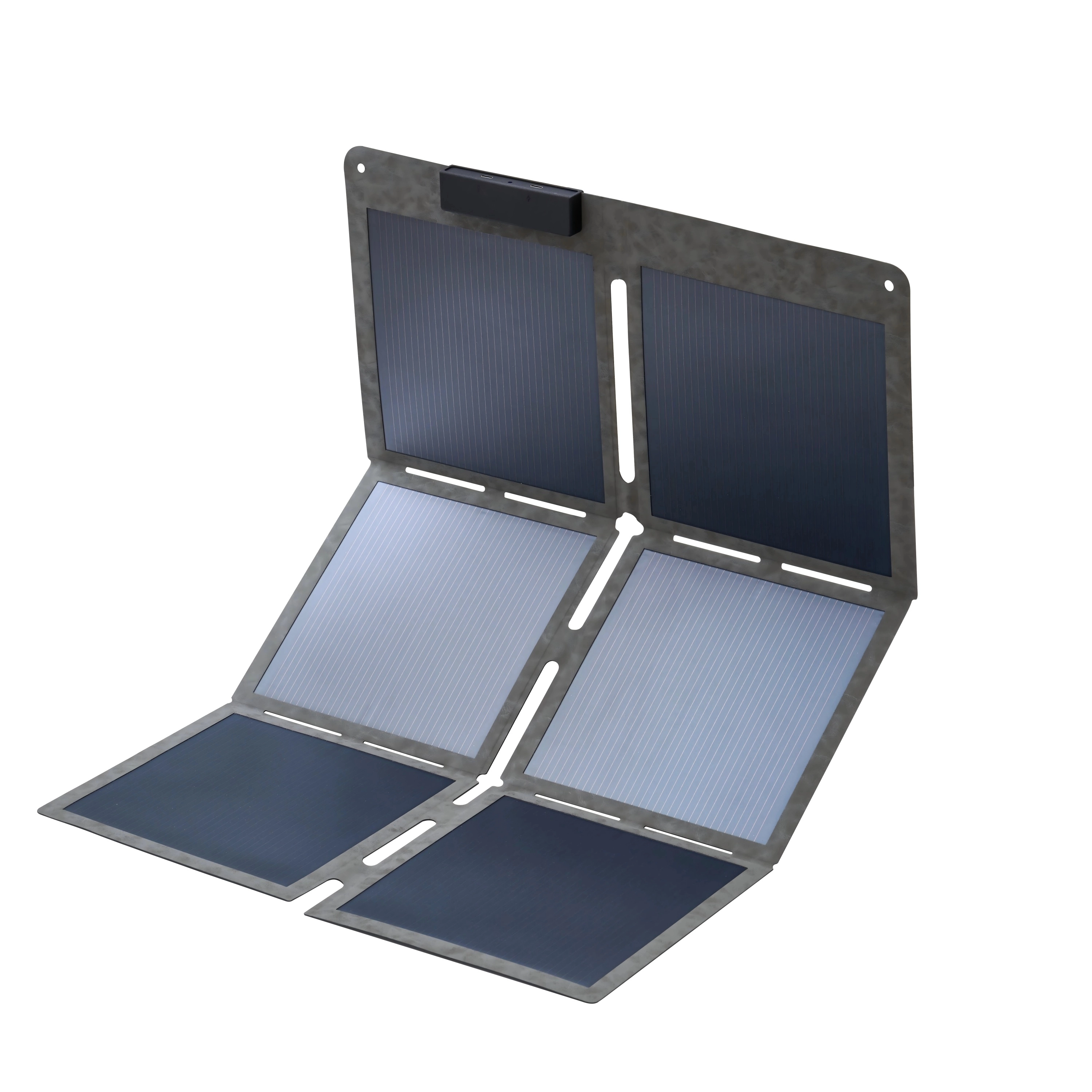
For manufacturers and product developers, understanding these factors is essential when selecting solar modules for specific applications. Suzhou SunFlex New Energy Co., Ltd. focuses on lightweight, flexible perovskite modules designed to convert light into electricity across different application environments. Through material development, controlled testing, and product customization, the company works to improve module stability, manufacturing yield, and practical application performance.
1. How Light Intensity Affects Flexible Perovskite Solar Cell Performance
Light intensity is one of the most important factors affecting solar cell output. Under stronger illumination, more photons reach the photovoltaic material, allowing the cell to generate more charge carriers. As a result, the electrical current generally increases with light intensity.
Under standard testing conditions, solar modules are commonly evaluated using simulated sunlight at a defined irradiance. However, real applications rarely maintain the same lighting conditions throughout the day.
For example, a flexible solar module installed on outdoor equipment may receive strong direct sunlight at midday, weaker illumination in the morning and evening, and significantly reduced light on cloudy days.
Under lower illumination, the module's output power decreases. Its open-circuit voltage and conversion efficiency may also change depending on the characteristics of the photovoltaic material and the electrical design.
This makes low-light performance an important consideration for portable energy products and indoor or semi-outdoor applications.
Suzhou SunFlex New Energy has developed patented low-light and anti-shading power generation technologies to address these application requirements. These technologies are intended to improve energy harvesting under less-than-ideal lighting conditions.
For product designers, this means that evaluating a solar module under only one standard illumination level may not provide enough information. Testing at multiple irradiance levels can help determine whether the module can meet the actual power requirements of the finished product.
2. The Influence of Temperature on Solar Cell Efficiency
Temperature has a direct influence on photovoltaic performance. Although sunlight provides the energy needed for electricity generation, excessive heat can negatively affect the electrical characteristics of solar cells.
When the operating temperature increases, the open-circuit voltage of most photovoltaic devices tends to decrease. Depending on the material system and module structure, this can result in lower power output even when sunlight remains strong.
This issue is particularly relevant for flexible solar modules installed on outdoor surfaces, portable equipment, vehicles, and products exposed to direct sunlight.
A module may perform well during laboratory testing at controlled temperatures but experience different electrical behavior when installed on a hot surface.
Temperature testing should therefore consider more than whether a module can withstand a particular temperature. Manufacturers should also evaluate:
Changes in maximum power output at different temperatures.
Variations in open-circuit voltage and short-circuit current.
Stability of electrical connections and encapsulation materials.
Physical changes caused by repeated heating and cooling.
Performance recovery after temperature cycling.
Suzhou SunFlex uses high- and low-temperature testing equipment to evaluate product behavior under different thermal conditions. This helps identify potential weaknesses before modules are integrated into customer products.
For buyers, requesting temperature-dependent electrical test data is a practical way to assess whether a flexible perovskite module is suitable for the intended operating environment.
3. Light Intensity and Temperature Work Together
In real operating environments, light intensity and temperature rarely change independently.
For example, strong midday sunlight generally increases the amount of energy reaching a solar module while also raising its surface temperature. On cloudy days, irradiance decreases, and the module may operate at a lower temperature.
These combined conditions can produce different electrical outputs.
A useful performance evaluation should therefore include several combinations of irradiance and temperature rather than testing each variable separately.
A practical testing program may include:
| Testing Condition | Main Performance Focus |
|---|---|
| Strong simulated sunlight | Maximum power output and electrical stability |
| Low-light illumination | Energy generation under weak lighting |
| High-temperature operation | Voltage and power changes |
| Low-temperature operation | Electrical response and material stability |
| Temperature cycling | Resistance to repeated thermal changes |
| Indoor lighting | Performance in controlled indoor environments |
This approach gives product developers a more realistic understanding of how a solar module behaves after integration.
It is also important to distinguish between instantaneous efficiency and long-term performance. A module may achieve good initial conversion efficiency but still require additional testing to demonstrate stable operation over time.
4. Why Humidity and UV Exposure Matter
Temperature and light intensity are not the only environmental factors that influence flexible perovskite solar cells. Moisture and ultraviolet radiation are also important considerations.
Humidity can affect sensitive photovoltaic materials, encapsulation layers, electrical contacts, and other components within a module. If moisture protection is insufficient, long-term exposure may lead to degradation and reduced electrical output.
High-temperature and high-humidity environments can accelerate certain degradation processes. This is particularly important for solar modules intended for outdoor use, where environmental exposure continues for extended periods.
Ultraviolet radiation presents another challenge. Continuous UV exposure may affect encapsulation materials and other components, potentially changing their optical or physical properties.
For this reason, manufacturers need to evaluate environmental durability through controlled aging tests.
Suzhou SunFlex has established its own IEC-standard testing center and introduced professional testing equipment, including:
Simulated sunlight steady-state aging chambers.
Damp heat and ultraviolet aging chambers.
High- and low-temperature testing chambers.
Constant temperature and humidity chambers.
Indoor light source aging chambers.
Tensile testing machines.
The company's reported T80 validation includes more than 1,500 hours of simulated sunlight exposure, over 2,000 hours of high-temperature and high-humidity testing, and more than 500 hours of UV aging testing.
These tests provide important reference data for evaluating material durability and module stability. Actual service life, however, should be assessed according to the specific product structure, operating conditions, and complete validation protocol.
5. Partial Shading and Its Effect on Energy Generation
Partial shading is a common issue in practical solar applications.
Unlike large solar installations with relatively open spaces, portable devices and integrated products often operate in environments where light is obstructed by surrounding objects, equipment structures, cables, or other components.
When part of a solar module is shaded, its electrical output may decrease. The extent of the reduction depends on the cell configuration, electrical connections, shading pattern, and power management system.
For applications involving flexible solar modules, this issue deserves particular attention because the installation surface may not always receive uniform sunlight.
A well-designed solution should consider both the photovoltaic module and its electrical management system.
Suzhou SunFlex has developed patented anti-shading power generation technology and provides support for integrating its independently developed micro maximum power point tracking (MPPT) systems.
An MPPT system helps the connected solar module operate closer to its available maximum power point as lighting conditions change. This can be especially useful for products that experience fluctuating illumination.
When evaluating a flexible solar solution, customers should consider testing different shading patterns rather than relying on a single overall shading percentage.
6. Testing Flexible Perovskite Modules Before Product Integration
Laboratory testing plays an important role in determining whether a flexible perovskite solar module is ready for commercial applications.
For product manufacturers, the most useful testing program is one that reflects the actual operating conditions of the finished product.
For example, a portable charging product may require different validation from a solar-powered outdoor sensor. The former may prioritize lightweight construction, charging efficiency, and portability, while the latter may require stronger environmental protection and stable operation over extended periods.
Suzhou SunFlex has more than 15 years of research and development experience and a CAS-supported technical background. The company has established testing capabilities supported by equipment aligned with IEC 61215, IEC 61730, IEC TS 63163, and ISO 5-related testing requirements.
Its testing process focuses on product stability, manufacturing yield, and cost control as key performance indicators.
Rather than relying exclusively on initial laboratory efficiency, manufacturers should examine several practical indicators:
Initial electrical output under defined illumination conditions.
Power retention after accelerated aging tests.
Electrical performance at different temperatures.
Resistance to humidity and UV exposure.
Mechanical performance during bending or handling.
Consistency between production batches.
These measurements help customers understand whether a module can meet the requirements of their application and identify potential improvements before mass production.
7. Practical Applications of Flexible Perovskite Solar Modules
The lightweight and flexible characteristics of perovskite solar technology create opportunities in applications where traditional rigid solar panels may be unsuitable.
Potential application areas include portable charging equipment, wearable or mobile energy products, smart outdoor devices, and customized electronic products.
For example, a flexible solar charging panel can be integrated into a portable power solution to provide additional energy during outdoor activities. The module's dimensions, shape, voltage, and integration method can be adjusted according to the product design.
For customers developing portable charging products, the flexible perovskite solar charging panel provides an example of how flexible photovoltaic technology can be incorporated into an end-product application.
The key consideration is not simply whether a solar module can generate electricity. Its output must also match the energy consumption, battery capacity, charging circuit, and available installation area of the finished product.
This is why early communication between the module manufacturer and product developer is valuable.
8. Why Customized Engineering Support Makes a Difference
Different products have different electrical and mechanical requirements. A standard solar module may not always fit the available installation space or meet the voltage requirements of a particular device.
Customization can address these challenges.
Suzhou SunFlex provides tailored flexible perovskite solar solutions with adjustable module dimensions, shapes, voltage specifications, and integration configurations.
The company also supports product integration, functional verification, and micro-MPPT system development to help customers move from module selection to practical product implementation.
Its automated manufacturing facilities support large-scale production of flexible solar products, with controlled manufacturing processes designed to improve consistency and delivery reliability.
For international customers, a comprehensive quality management system and structured product validation process are equally important. They help ensure that the delivered modules are supported by relevant performance data and appropriate compliance documentation.
Engineering communication is also essential. When customers encounter changes in installation conditions, power requirements, or product structure, responsive technical support can help identify suitable adjustments before these changes affect the production schedule.
Conclusion
Flexible perovskite solar cell performance is influenced by several interconnected factors, including light intensity, operating temperature, humidity, UV exposure, and partial shading.
For practical applications, evaluating only the initial conversion efficiency is not enough. Manufacturers and product developers need to understand how modules perform under different environmental conditions and whether their electrical output remains stable during extended operation.
Suzhou SunFlex New Energy Co., Ltd. combines more than 15 years of R&D experience, patented low-light and anti-shading technologies, in-house testing capabilities, and automated manufacturing to develop lightweight and flexible perovskite solar solutions.
By focusing on product stability, manufacturing yield, and application-specific engineering, SunFlex helps customers explore more practical ways to integrate flexible solar energy into their products.
As demand for portable and adaptable renewable energy continues to grow, reliable testing and customized module design will remain essential to the commercial development of flexible perovskite solar technology.

